
House of Glass
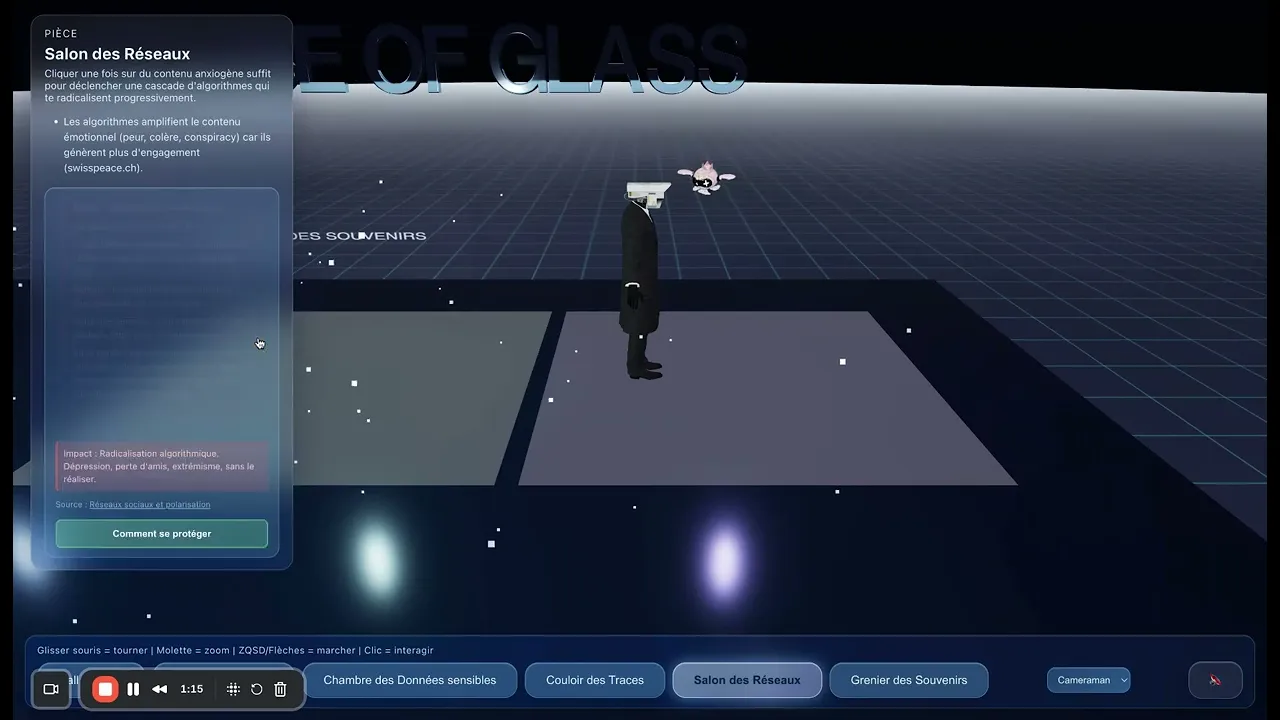
The goal of House of Glass was to transform an abstract and often invisible topic, digital privacy, into a concrete, emotional, and understandable experience.
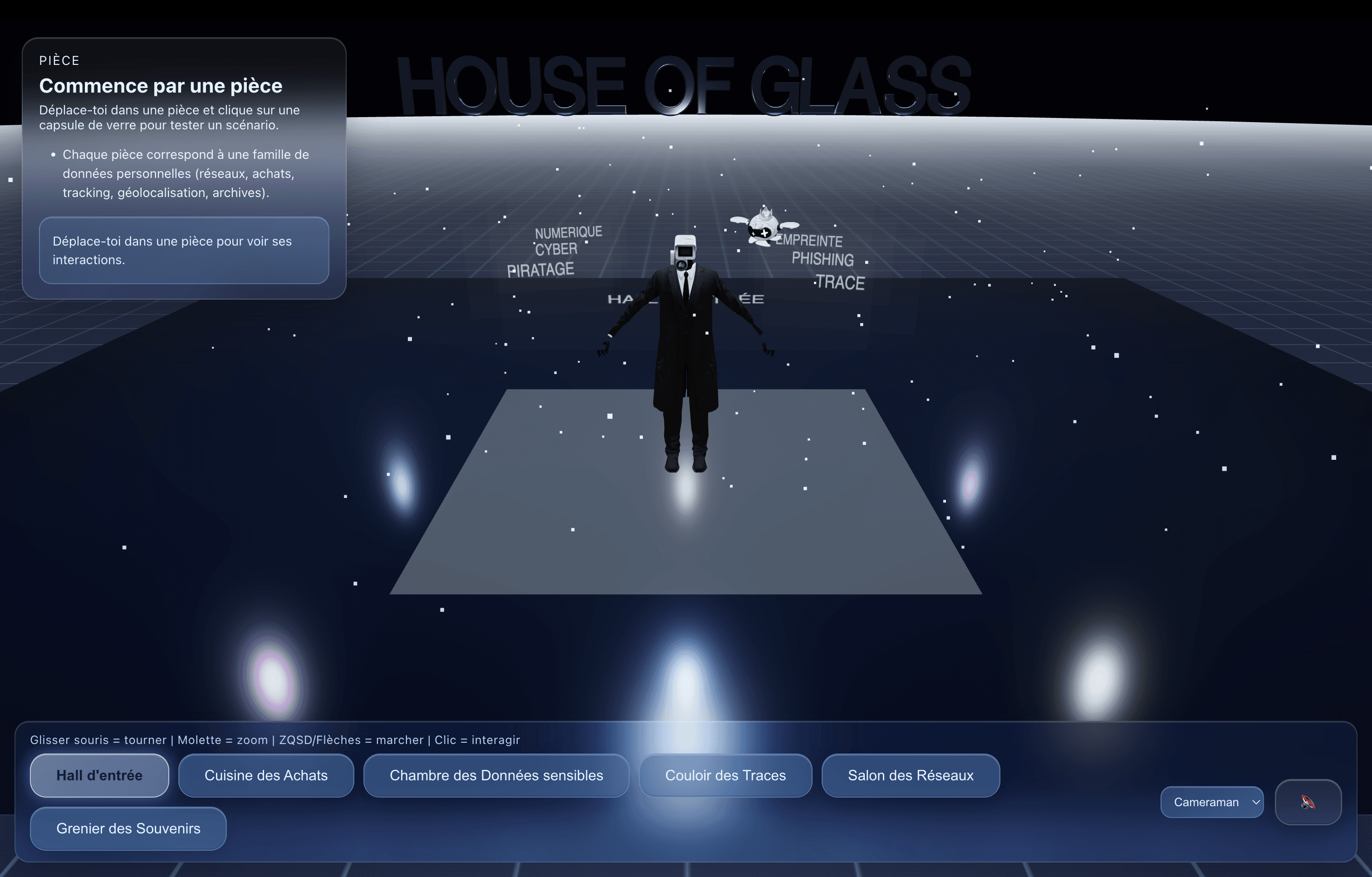
Instead of presenting information in a purely educational or technical way, the project relies on narrative design and interaction. Each room of the house represents a different aspect of data exposure: social networks, tracking, personalization, surveillance, and loss of control.
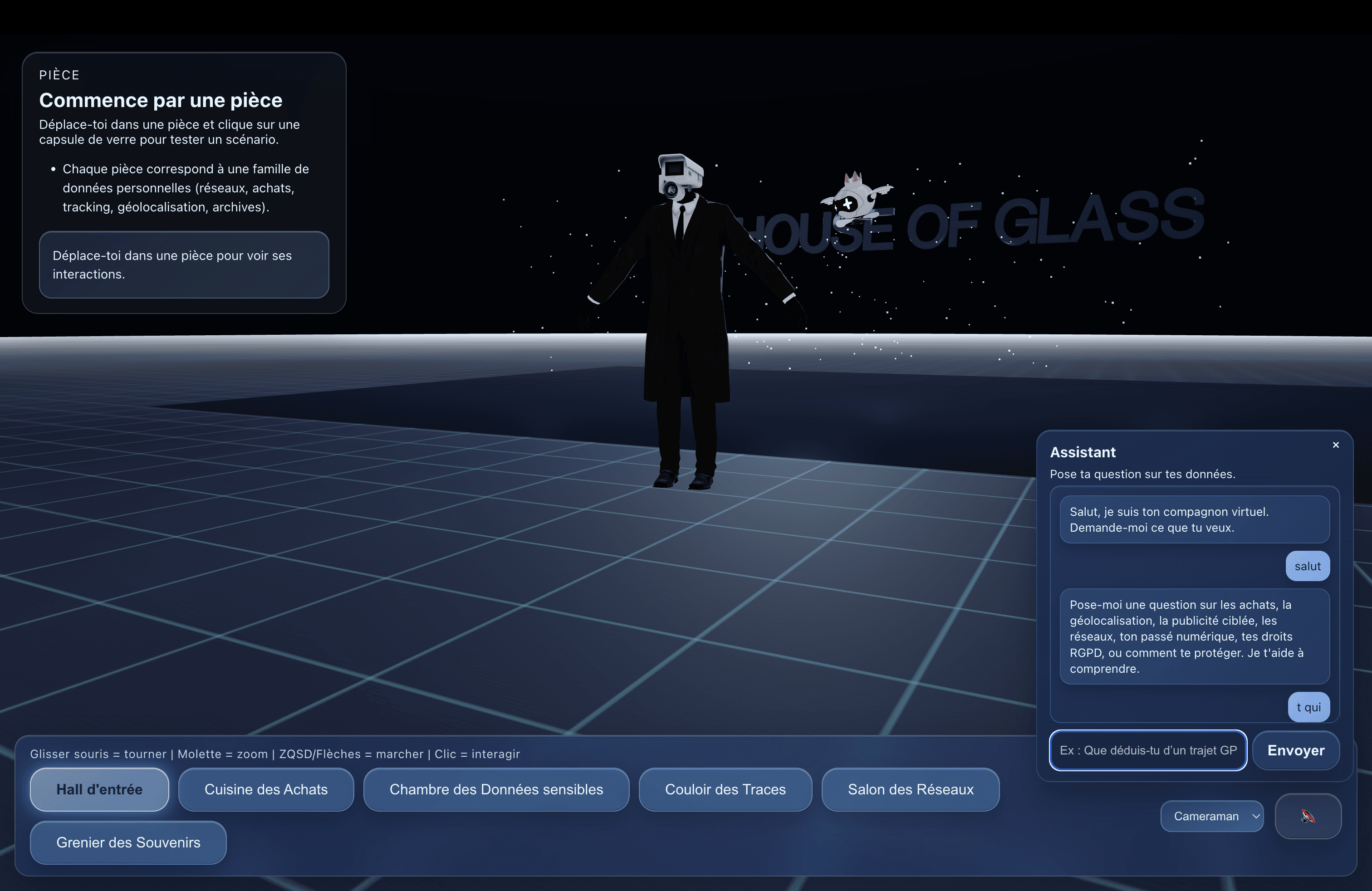
The experience is guided by a virtual assistant, Moon, who helps the user navigate the space and interpret what they discover, reinforcing the feeling of being accompanied rather than confronted.
Client
HEIG-VD
Services
Interactive design
House of Glass is built on a simple metaphor:
when everything is transparent, nothing is really private.
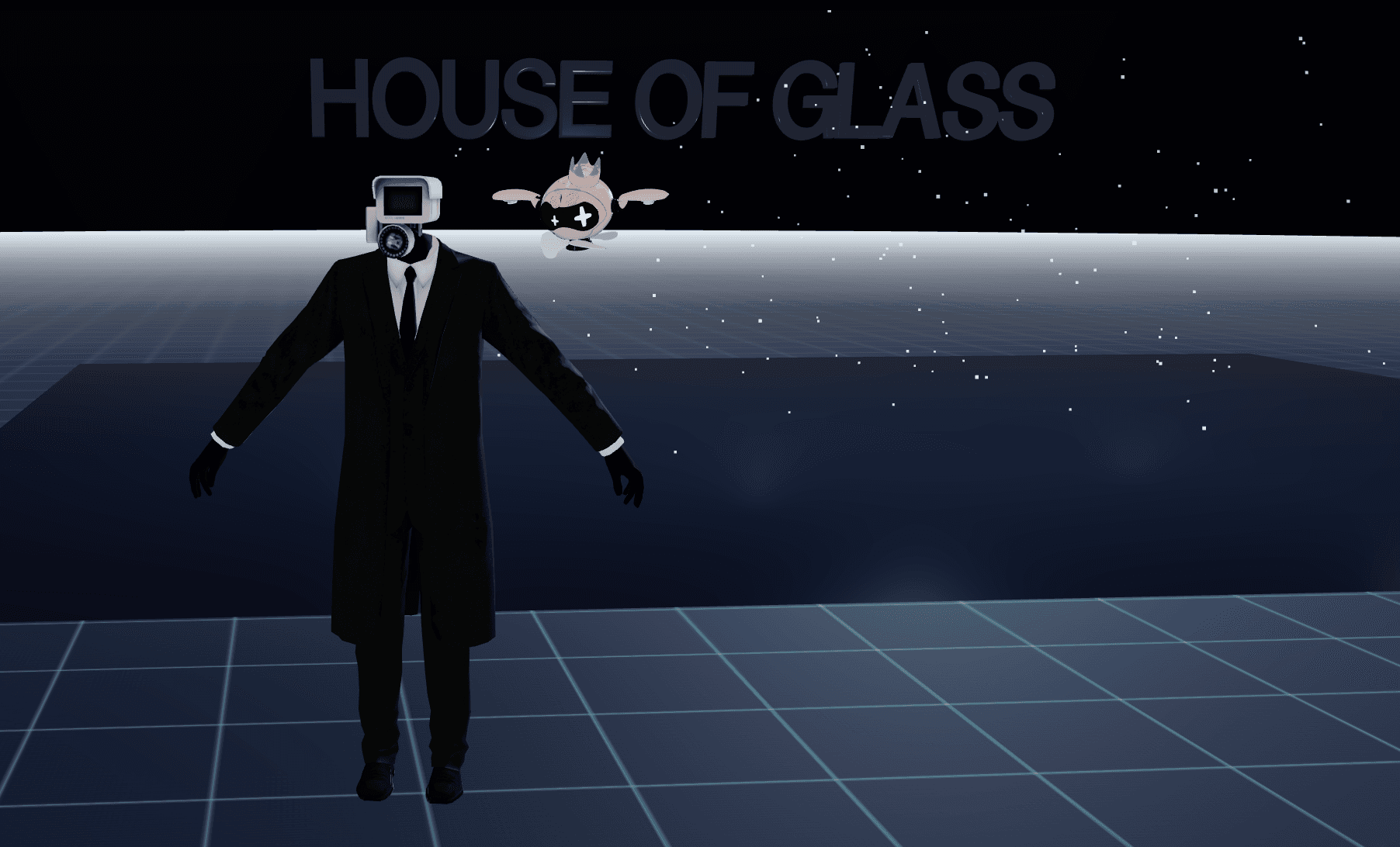
By placing the user inside a fragile, fully visible environment, the project highlights how personal data is constantly accessible, often without awareness or consent. The aim is not to scare, but to encourage reflection and critical thinking about digital habits.
The experience was designed to be accessible to a wide audience, without requiring technical knowledge, while still conveying accurate and meaningful insights about privacy and data usage.
With House of Glass, the project demonstrates how interactive storytelling can be used as a powerful tool to address complex societal issues.
It shows that design can go beyond aesthetics and functionality to become a medium for awareness, dialogue, and understanding.
Check out some of my recent projects.

House of Glass
The goal of House of Glass was to transform an abstract and often invisible topic, digital privacy, into a concrete, emotional, and understandable experience.
Instead of presenting information in a purely educational or technical way, the project relies on narrative design and interaction. Each room of the house represents a different aspect of data exposure: social networks, tracking, personalization, surveillance, and loss of control.
The experience is guided by a virtual assistant, Moon, who helps the user navigate the space and interpret what they discover, reinforcing the feeling of being accompanied rather than confronted.
Client
HEIG-VD
Services
Interactive design
House of Glass is built on a simple metaphor:
when everything is transparent, nothing is really private.
By placing the user inside a fragile, fully visible environment, the project highlights how personal data is constantly accessible, often without awareness or consent. The aim is not to scare, but to encourage reflection and critical thinking about digital habits.
The experience was designed to be accessible to a wide audience, without requiring technical knowledge, while still conveying accurate and meaningful insights about privacy and data usage.
With House of Glass, the project demonstrates how interactive storytelling can be used as a powerful tool to address complex societal issues.
It shows that design can go beyond aesthetics and functionality to become a medium for awareness, dialogue, and understanding.
Check out some of my recent projects.
House of Glass
The goal of House of Glass was to transform an abstract and often invisible topic, digital privacy, into a concrete, emotional, and understandable experience.
Instead of presenting information in a purely educational or technical way, the project relies on narrative design and interaction. Each room of the house represents a different aspect of data exposure: social networks, tracking, personalization, surveillance, and loss of control.
The experience is guided by a virtual assistant, Moon, who helps the user navigate the space and interpret what they discover, reinforcing the feeling of being accompanied rather than confronted.
Client
HEIG-VD
Services
Interactive design
House of Glass is built on a simple metaphor:
when everything is transparent, nothing is really private.
By placing the user inside a fragile, fully visible environment, the project highlights how personal data is constantly accessible, often without awareness or consent. The aim is not to scare, but to encourage reflection and critical thinking about digital habits.
The experience was designed to be accessible to a wide audience, without requiring technical knowledge, while still conveying accurate and meaningful insights about privacy and data usage.
With House of Glass, the project demonstrates how interactive storytelling can be used as a powerful tool to address complex societal issues.
It shows that design can go beyond aesthetics and functionality to become a medium for awareness, dialogue, and understanding.